How to Raise a Curious Child in a World of Passive Learning

Free PopSmart Open House: Science Olympiad and National Science Bowl! Click here!

What we're talking about!
Check back often for updates!
Encouraging questions, exploration, and independent thinking in an age of endless content.
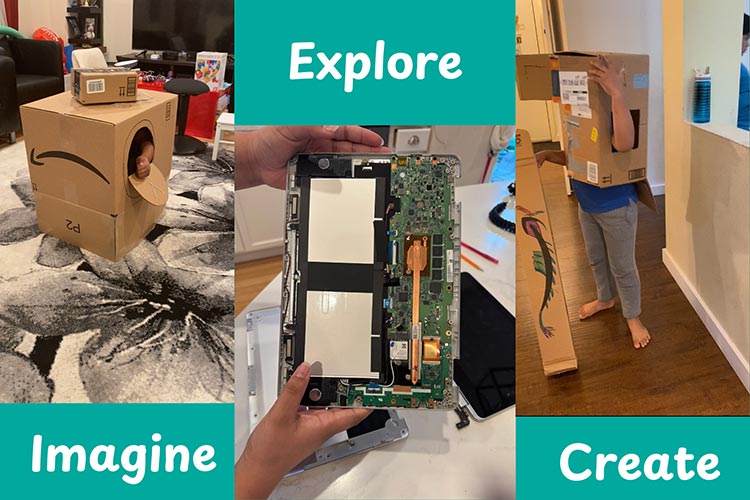
We live in a time when children have access to more information than any generation before them. With a few taps on a screen, they can watch a tutorial, look up an answer, or explore a topic in seconds. While this unprecedented access to knowledge is powerful, it also comes with a hidden challenge: much of modern learning has become passive.
Videos autoplay. Algorithms recommend the next piece of content. Lessons are delivered, summarized, and simplified for easy consumption. Children can spend hours absorbing information without ever needing to ask a question or wrestle with an idea.
But real learning—the kind that builds thinkers, innovators, and problem-solvers—doesn’t come from passive consumption. It comes from curiosity.
Curiosity is the spark that pushes a child to ask why, how, and what if. It is the force that turns information into understanding and understanding into discovery.
The good news? Curiosity is not just an inborn trait. It can be nurtured and strengthened. Here are some ways parents can help raise curious children even in a world that often encourages passive learning.
If you have ever spent time with a young child, you know the famous phase: Why? Why? Why?
While it can sometimes feel exhausting, those questions are the earliest signs of intellectual exploration. Curiosity begins with the willingness to question the world.
Instead of shutting down questions with quick answers or dismissing them with “because that’s just how it works,” try turning the question back to your child.
You might ask:
These kinds of responses show children that questions are not interruptions to learning—they are the beginning of it.
When children ask a question today, the instinct is often to search for the answer immediately online. While there is nothing wrong with using technology as a tool, constantly jumping to the fastest answer can short-circuit deeper thinking.
Instead, create space for wondering.
If your child asks why the moon looks different on different nights, pause before searching. Look at the sky together. Ask what they notice. Encourage them to draw what they see over several days.
Curiosity thrives when children have time to observe, speculate, and explore, rather than simply receiving information.
Many children grow up associating learning with getting the “right answer.” While accuracy matters, an overemphasis on correctness can unintentionally discourage experimentation.
Curious learners often try ideas that don’t work the first time. They ask unusual questions. They make mistakes.
When children attempt something difficult—whether writing a story, solving a math problem, or building something—acknowledge their process.
Instead of saying, “That’s the right answer,” you might say:
These kinds of responses reinforce that learning is about thinking and exploring, not just arriving at a result.
Curiosity often grows from environments that allow children to tinker, build, imagine, and experiment.
This doesn’t require elaborate materials or expensive kits. Often, the most engaging experiences come from simple opportunities to explore.
Children might:
When children are given the freedom to investigate the world around them, they begin to see learning not as a task but as an adventure.
In a world filled with constant stimulation, boredom can feel uncomfortable—for both children and parents. The instinct is often to fill empty moments with screens or structured activities.
But boredom can be one of curiosity’s greatest allies.
When children are not immediately entertained, their minds begin searching for engagement. They start inventing games, asking questions, or exploring their surroundings.
Those quiet moments can lead to imaginative play, creative thinking, and unexpected discoveries.
Sometimes the best thing we can do for curiosity is simply leave space for it to emerge.
Children learn as much from what we do as from what we say. If adults around them rarely ask questions or explore new ideas, children may come to see curiosity as something that belongs only in school.
Instead, let your child see your own curiosity at work.
Share things you are wondering about. Explore new topics together. Say things like:
When children see adults learning alongside them, they begin to understand that curiosity is not just for childhood—it is a lifelong habit.
Passive learning often happens in silence – watching videos, scrolling through content, or reading summaries.
Active learning, on the other hand, thrives on conversation.
Talk about what your child reads, watches, or learns. Ask them to explain ideas in their own words. Sit down with them and watch what they are watching. Invite them to challenge perspectives and share opinions.
Questions like these can spark deeper thinking:
These discussions transform information into understanding.
Perhaps the most important thing we can do is protect the emotional side of curiosity: wonder.
Wonder is the feeling that the world is full of fascinating mysteries waiting to be explored. It’s the moment a child notices a pattern in nature, imagines a new invention, or asks a question no one in the room expected.
When curiosity is nurtured, children grow into learners who are not simply absorbing information but actively shaping their understanding of the world.
In a world where answers are always available, the most valuable skill a child can develop is not memorizing information—it’s knowing how to ask meaningful questions.
Curious children become curious adults. They become thinkers, innovators, creators, and problem-solvers.
They don’t just accept the world as it is.
They wonder how it could be different.
And that simple habit—asking what if—can change everything.
Ready to empower your child’s critical thinking? Explore our different programs and discover how PopSmart Academy can help your child reach their full potential. Book a FREE trial class here.

Help your kids fall in love with reading!
Need a list of amazing books to get your kids inspired about writing their own stories?
Grab your free copy by completing the form.
We'll email you the ebook!