Stories of young changemakers protecting our planet
– and what they teach us about raising empowered, Earth-conscious children.
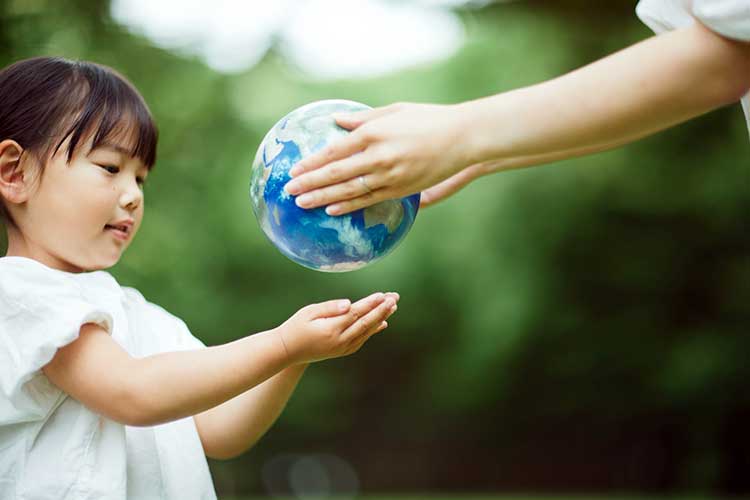
Every year, April reminds us to look down at the soil beneath our feet and up at the sky above our heads — to remember that the Earth is not just a backdrop to our lives, but the very foundation of them. And while adults often feel the weight of environmental challenges as something daunting, children see something else entirely: possibility.
Across the world, young people are doing the real, hard, inspiring work of caring for the planet. They are writing letters to presidents, filing legal petitions, lobbying state legislatures, and speaking at the United Nations — not as adults in training, but as children in action.
At Popsmart Academy, we believe this is not a coincidence. It is the natural result of nurturing curious, empowered learners who understand that their voice matters. This Earth Month, we are proud to share four true stories of children who proved exactly that.
- Mari Copeny, “Little Miss Flint” — Age 8, Flint, Michigan, USA
In 2016, eight-year-old Mari Copeny was watching her hometown of Flint, Michigan, suffer through a devastating water crisis. The city’s water supply had been contaminated with lead, making it unsafe for thousands of families to drink from their own taps. Many adults felt helpless. Mari did not.
She sat down and wrote a letter to President Obama, asking if he would meet with her and other Flint residents traveling to Washington for congressional hearings. Obama’s response surprised everyone: he wrote back personally, and then visited Flint himself — a visit that drew national attention to the crisis and helped secure $100 million in federal funding to repair the city’s water system.
But Mari did not stop there. When the state stopped providing free bottled water, she raised over $280,000 to distribute water and filters to Flint families. She has since donated over a million bottles of water and partnered with a water filtration company to fund clean water solutions — all while still in elementary and middle school.
What Mari shows us: A child does not need resources, status, or age to make a difference. She needs belief that her voice matters — and someone to help her find it.

- Ridhima Pandey — Age 9, Uttarakhand, India
Ridhima Pandey was only six years old when catastrophic floods tore through her home state of Uttarakhand, India, killing over 1,000 people. The images of destruction stayed with her. She began asking questions: Why did this happen? Who was responsible? What could be done?
At nine years old, Ridhima took the extraordinary step of filing a legal petition against the Indian government for failing to implement its own environmental laws and act on climate change. Her case cited the Indian Constitution, the Public Trust Doctrine, and the principle of intergenerational equity — the idea that today’s children have a right to inherit a livable planet.
In 2019, Ridhima joined 15 other young activists from around the world — including Greta Thunberg — in filing a formal complaint to the United Nations Committee on the Rights of the Child. In 2020, the BBC named her to its annual list of 100 Women.
What Ridhima shows us: When children are taught to understand systems — how laws work, how governments are accountable, how their rights connect to the world around them — they become advocates, not bystanders.

- Xiuhtezcatl Martinez — Age 6, Colorado, USA
At just six years old, Xiuhtezcatl Martinez stood on a stage at a national climate event and spoke to a crowd of adults about the future of the planet. He was not performing. He was serious.
Raised in Colorado with deep roots in his Indigenous Xochimilcan and Mexican heritage, Xiuhtezcatl grew up understanding the Earth not as a resource to be managed, but as a living world to be protected. By age nine, he was appealing to his local city council to ban pesticides in public parks. By his early teens, he was delivering speeches at the United Nations General Assembly in English, Spanish, and Nahuatl.
He became Youth Director of Earth Guardians, a global network of young environmental activists, and was awarded the U.S. Volunteer Service Award by President Obama. He later became one of 21 youth plaintiffs in Juliana v. United States, a landmark lawsuit holding the federal government accountable for climate inaction.
What Xiuhtezcatl shows us: Cultural identity and environmental stewardship are deeply connected. When children are rooted in who they are and where they come from, their passion for protecting the Earth runs deep.

- Alex Lin — Age 11, Rhode Island, USA
In 2004, eleven-year-old Alex Lin was reading the newspaper when a short article stopped him cold: millions of old computers and electronics were being dumped in landfills, leaching toxic chemicals into soil and groundwater around the world. Alex did not just read past it. He called his friends.
Together, they founded Project WIN — Westerly Innovations Network, named after their hometown in Rhode Island. The group began collecting old electronics, recycling what could not be saved, and refurbishing working computers to send to schools and communities in developing countries. After the 2004 tsunami, they sent computers to schools in Malaysia and Sri Lanka. One school was renamed the WIN Learning Center in their honor.
Not content to just recycle, Alex took his campaign to the Rhode Island state legislature. He collected 400 signatures and lobbied lawmakers directly. In 2006, Rhode Island passed a bill banning the dumping of electronic waste — one of the first such laws in the country. By the time he was a teenager, Alex had overseen the recycling of over 300,000 pounds of e-waste.
What Alex shows us: Curiosity plus initiative is a remarkable combination. When children are taught to ask “What can I do?” instead of “What can adults do?” the results can be extraordinary.

What These Stories Mean for Your Child
Mari, Ridhima, Xiuhtezcatl, and Alex did not wait to grow up before caring about the world. They were not exceptional children in the sense of being rare — they were exceptional in the sense of being nurtured. Each of them had adults around them who took their questions seriously, gave them room to act, and believed that a child’s voice was worth listening to.
At Popsmart Academy, that is exactly what we are here to do. This Earth Month, here are a few ways to bring that spirit into your home:
- Share these stories with your child and ask: “If you could change one thing about the world, what would it be?” Then listen — really listen.
- Let them lead a small eco-action at home — starting a compost bin, tracking water use, or organizing an e-waste drop-off in your neighborhood.
- Help them write a letter — to a teacher, a local official, or even just to a friend — about something in the environment they care about.
- Celebrate their caring, not just their results. Mari’s first act was writing a letter. Alex’s first act was making a phone call. Every big change starts somewhere small.
The future of our planet will be shaped by children who are, right now, noticing things, asking questions, and refusing to be told their actions are too small. Our job is simply to make sure they know their caring matters.
Happy Earth Month from all of us at Popsmart Academy.
Sources & Further Reading
Mari Copeny: maricopeny.com | Ridhima Pandey: Wikipedia | Xiuhtezcatl Martinez: xiuhtezcatl.com | Alex Lin: InspireMyKids
Ready to empower your child’s critical thinking? Explore our different programs and discover how PopSmart Academy can help your child reach their full potential. Book a FREE trial class here.