Why Students Don't Need More Content, They Need Clarity

Win Prizes at our Future Leaders Debate Championship! Click here!

What we're talking about!
Check back often for updates!
Classroom isn’t about information anymore, it’s about interpretation.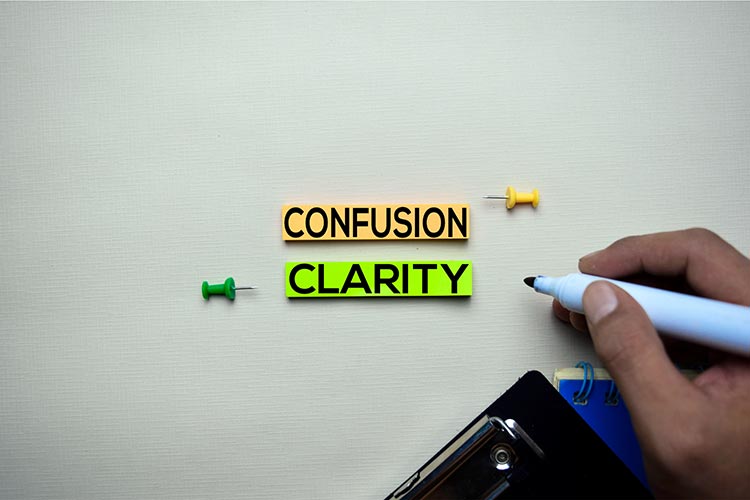
Walk into any classroom today, and you’ll notice something different from even a decade ago.
Students are not short on information.
In fact, they are surrounded by it.
They can search any concept, watch tutorials, read summaries, and access explanations in seconds. Whether it’s a science concept, a historical event, or a writing technique, the answers are already out there—organized, simplified, and endlessly available. Yet, despite this abundance, something still feels missing.
Students are not coming in asking, “What is this?”
They are asking, “What does this mean?”
This is the shift we are seeing more clearly than ever: Students don’t need more content. They need clarity.
There was a time when education was primarily about access. Teachers were the gatekeepers of knowledge. Textbooks were the primary source. Information had to be delivered.
That world no longer exists.
Today’s students live in what we might call the age of interpretation. Information is abundant—but understanding is not.
Knowing something is no longer the challenge.
Making sense of it is.
A student can memorize the steps of photosynthesis, but struggle to explain why it matters. They can watch a video on persuasive writing, but feel unsure about how to structure their own argument. They can read about climate change, but not know how to evaluate conflicting viewpoints. This is where learning becomes deeper—and more difficult because clarity requires thinking.
When students struggle, the instinct is often to give them more:
More notes.
More examples.
More videos.
More explanations.
At the same time, more content doesn’t always lead to better understanding. In fact, it can do the opposite. Too much information can:
Students don’t always need another explanation. They need help organizing, connecting, and interpreting what they already have. Clarity is not about adding more. It’s about making meaning.
Clarity is not simplification. It’s not reducing complexity to the point where thinking disappears.
Clarity is about helping students:
It’s the difference between:
“I understand this example”
and
“I understand how to approach any example like this.”
Clarity turns knowledge into capability.
In this new landscape, the role of the educator has evolved. Teachers are no longer just delivering information. They are helping students make sense of it.
This means:
A good lesson today is not one where everything is explained perfectly the first time. It’s one where students leave thinking, questioning, and refining their understanding.
Many students today experience a quiet frustration.
They’ve seen the material.
They’ve read the notes.
They’ve watched the video.
But when asked to apply it, explain it, or extend it—they hesitate.
This is not a lack of effort.
It’s a lack of clarity.
They are navigating a gap between exposure and understanding and that gap is where real learning happens. It’s also where students need the most support.
If clarity is the goal, then the way we design learning must shift.
Here are a few ways to help students move from content consumption to meaningful understanding:
This change is not just happening in classrooms—it’s happening at home as well. Parents often feel pressure to provide answers quickly. Just like in school, the goal is not immediate correctness—it’s deeper understanding.
Instead of jumping in with explanations, try:
These small shifts turn everyday conversations into powerful learning moments.
When students gain clarity, something else happens: they become more confident.
They begin to:
Students are no longer just repeating information—they are understanding it. Confidence built on understanding is far more durable than confidence built on memorization.
As we look ahead, one thing is clear:
We don’t need to give students more information.
We need to help them do more with what they already have.
The students who will thrive are not the ones who know the most. They are the ones who can:
In a world full of answers, the real advantage lies in understanding. At PopSmart Academy, we see this every day. Students walk in with information—but leave with insight. That is the shift that matters because education is no longer about filling minds with content. It’s about helping students build clarity, confidence, and the ability to think. In today’s world, that is the skill that changes everything.
Ready to empower your child’s critical thinking? Explore our different programs and discover how PopSmart Academy can help your child reach their full potential. Book a FREE trial class here.

Help your kids fall in love with reading!
Need a list of amazing books to get your kids inspired about writing their own stories?
Grab your free copy by completing the form.
We'll email you the ebook!