I Wanted to Make a Soup but Ended Up with a Dip

Win Prizes at our Future Leaders Debate Championship! Click here!

What we're talking about!
Check back often for updates!
What a Kitchen Experiment Taught Me About Adaptability.
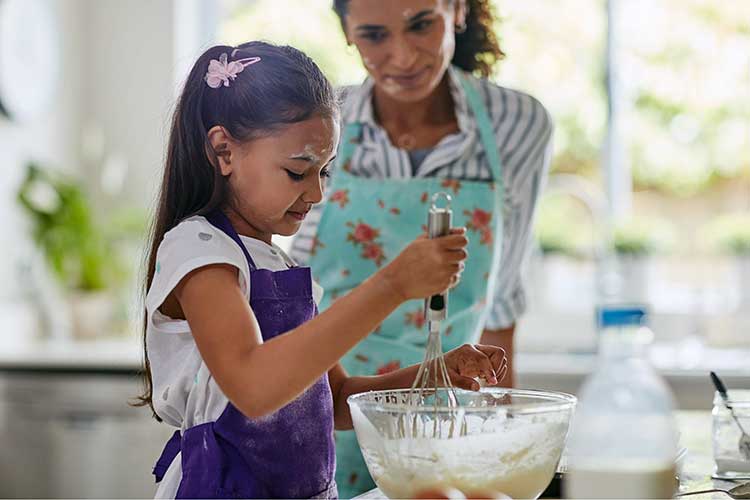
Sometimes life (and a kitchen experiment) reminds us that the best outcomes come from a willingness to pivot. At PopSmart Academy, we often talk about the importance of having a plan—whether it’s a lesson plan, a business plan, or just a roadmap for a new project. But we also know that the magic often lies in being flexible enough to change that plan when the moment calls for it.
Recently, I had a perfect little culinary metaphor for this. I started out in the kitchen planning to make a roasted vegetable soup. I had my carrots, my garlic, my red peppers all roasting away with that lovely aroma filling the kitchen. But somewhere along the way, I realized what I really wanted was a dip. Maybe it was the texture, maybe it was just a whim, but I ended up blending those roasted veggies into this delicious, smoky dip instead of a soup. And guess what? It was a hit.
This moment stuck with me because it mirrors what we see so often in learning, teaching, and even parenting. We begin with a clear plan: a lesson outline, a project goal, a career path, a schedule. But as new information emerges—new interests, new constraints, new opportunities—we face a choice. Do we force the original plan to work, or do we allow ourselves to adapt?
As a mom at home and as an educator at PopSmart Academy, I believe that strong learning doesn’t come from rigid execution. It comes from responsive thinking. The goal isn’t to abandon planning; it’s to plan with flexibility built in.
Here are three practical ways to practice flexible planning—without losing structure or focus.
1. Plan for the outcome, not just the method
When we plan, we often over-commit to how something must be done instead of what we are trying to achieve.
In the kitchen, my real goal wasn’t “soup.” It was to create something nourishing and enjoyable from roasted vegetables. Once I recognized that, switching to a dip didn’t feel like failure—it felt like alignment.
In learning and work, ask:
When students, teachers, or teams understand the purpose behind a plan, they can adapt intelligently rather than abandoning direction altogether.
2. Treat feedback as information, not interruption
Plans often fall apart because we interpret new information as a disruption instead of a data point.
In my case, the feedback was internal: texture, mood, intuition. In classrooms, feedback might come from student questions, confusion, excitement, or disengagement. In business, it may come from customers, results, or constraints.
Flexible planners pause and ask:
Adjusting a plan based on feedback is not inefficiency—it is optimization.
3. Build reflection points into your plan
Flexibility is much easier when it is intentional.
Instead of viewing a plan as a straight line, build in moments to reassess:
Whether it’s midway through a lesson, halfway through a project, or right before execution, these reflection points give you permission to pivot thoughtfully rather than reactively.
The best plans are not the ones that never change. They are the ones that evolve with insight.
In the end, I didn’t fail at making soup. I succeeded at paying attention.
And that’s the lesson worth carrying forward—for our students, our children, and ourselves. Planning gives us direction. Flexibility gives us depth. When we allow both to coexist, we often end up with something better than what we originally imagined.
Sometimes, that something just happens to be a really good dip.
That little shift in my kitchen plan is exactly the kind of flexibility we try to embrace in our teaching and learning journeys. Sometimes you start with one goal, and along the way, you discover a better, tastier, or more interesting destination. And that’s not just okay; it’s wonderful.
So whether you’re teaching a class, running a business, or just trying a new recipe, remember: the plan is there to guide you, but the real fun is in staying flexible and enjoying the unexpected outcomes. After all, sometimes a dip is exactly what you didn’t know you needed.
Ready to empower your child’s critical thinking? Explore our science programs and discover how PopSmart Academy can help your child reach their full potential. Book a FREE trial class here.


Help your kids fall in love with reading!
Need a list of amazing books to get your kids inspired about writing their own stories?
Grab your free copy by completing the form.
We'll email you the ebook!