The Skills That Mattered Most in 2025 (and Why They'll Matter Even More in 2026)

Win Prizes at our Future Leaders Debate Championship! Click here!

What we're talking about!
Check back often for updates!
Preparing tomorrow's thinkers with the skills that matter most today.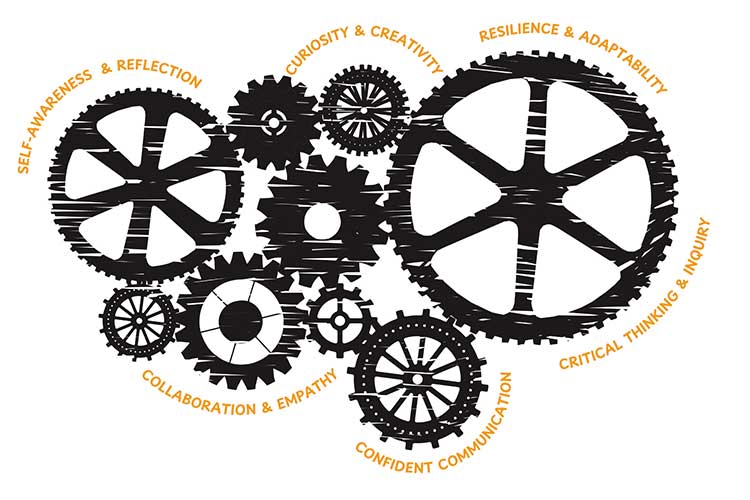
If 2025 taught us anything at PopSmart Academy, it’s this: academic excellence matters, but it’s the human skills—the ones that fuel curiosity, collaboration, and communication—that truly define a learner’s growth.
In classrooms, debate rooms, writing circles, science labs, and entrepreneurship circles we saw these skills rise to the surface. They weren’t always loud or polished, but they were powerful: a quiet student raising their hand for the first time, a writing revision that showed deeper thinking, a “what if” question that sparked an entire class discussion.
As we look ahead to 2026, we’re carrying these moments—and the skills they reflect—with even greater intention. Here’s what we saw emerge in 2025, and why we believe these abilities will shape the future of learning and leadership.
Confident Communication
What it looked like in 2025:
Whether students were presenting a persuasive speech, leading a debate round, or writing a story from an unusual perspective, we witnessed a growing ability to express ideas clearly and meaningfully.
Even more powerful? Many of them learned to listen—with curiosity and empathy. Because real communication is a two-way street.
Why it matters in 2026:
In a world of AI-generated content and rapid digital discourse, human communication—storytelling, persuasion, and nuance—stands out. Kids who can speak and write with clarity will lead with impact.
Critical Thinking and Inquiry
What it looked like in 2025:
We saw students challenge assumptions in mock trials, dissect flawed arguments in debate, and question lab results that didn’t match their hypotheses. Our writing prompts didn’t just ask for answers—they asked for interpretation.
And our students rose to the occasion with questions like:
What’s the evidence for this?
Is there another way to look at it?
How would someone else respond to this idea?
Why it matters in 2026:
The ability to think critically—to evaluate sources, ask deeper questions, and solve problems creatively—isn’t optional in today’s world. It’s how students will navigate information overload and contribute meaningfully in any field.
Curiosity and Creativity
What it looked like in 2025:
This year, curiosity showed up everywhere: in wild science hypotheses, in characters that came alive in our writing workshops, and in the “what if” questions that launched whole class discussions.
Creativity wasn’t just about being artistic—it was about thinking differently, trying something new, and exploring ideas with wonder.
Why it matters in 2026:
As automation grows, curiosity is the new competitive edge. The kids who ask bold questions, take imaginative leaps, and aren’t afraid to explore beyond the syllabus will be the ones shaping the future.
Collaboration and Empathy
What it looked like in 2025:
From team science experiments to writing circles, our students practiced giving feedback, disagreeing respectfully, and working toward a shared goal. They learned that great ideas often get even better when we build on each other’s perspectives.
Why it matters in 2026:
We need more thoughtful collaborators, not just solo achievers. Whether working on a startup, in research, or in community leadership, students must learn to connect, listen, and co-create.
Resilience and Adaptability
What it looked like in 2025:
Not every project went smoothly. Essays got rewritten. Experiments failed. Debate arguments hit dead ends. But our students learned how to regroup, rethink, and try again.
One 6th grader summed it up best:
“I messed up the whole intro of my speech, but I didn’t stop. I just kept going. I think that’s kind of a win.”
Why it matters in 2026:
Resilience is the bedrock of long-term success. In a world where change is constant, students who can adapt and bounce back will thrive—not just academically, but emotionally and professionally.
Self-Awareness and Reflection
What it looked like in 2025:
At PopSmart, we made space for students to reflect on what they learned, how they felt, and where they wanted to grow. Journals, showcase nights, and peer reviews became tools for building metacognition—the ability to think about one’s own thinking.
Why it matters in 2026:
Self-awareness empowers students to become intentional learners. It helps them set goals, manage emotions, advocate for themselves, and ultimately, grow with purpose.
Looking Ahead: Skills Over Scores
As we move into 2026, our mission remains clear:
Equip students not just to answer questions, but to ask better ones.
To not just compete, but to collaborate.
To not just perform, but to reflect, adapt, and lead.
We’ll continue designing experiences that build these human skills—through science, writing, debate, storytelling, and curiosity-driven learning. Because these are the skills that last long after the test scores fade.
We’d love to hear from you:
What skill do you hope your child builds in 2026?
Drop us a comment, share your reflections, or email us your thoughts—we’re listening, and learning too.
Ready to empower your child’s critical thinking? Explore our science programs and discover how PopSmart Academy can help your child reach their full potential. Book a FREE trial class here.

Help your kids fall in love with reading!
Need a list of amazing books to get your kids inspired about writing their own stories?
Grab your free copy by completing the form.
We'll email you the ebook!